
Information
A Healthy Start to Solid Foods for Babies
From six months onwards I plan the move to solid foods with you: the order of foods, textures, the number of meals and how to introduce allergenic foods.
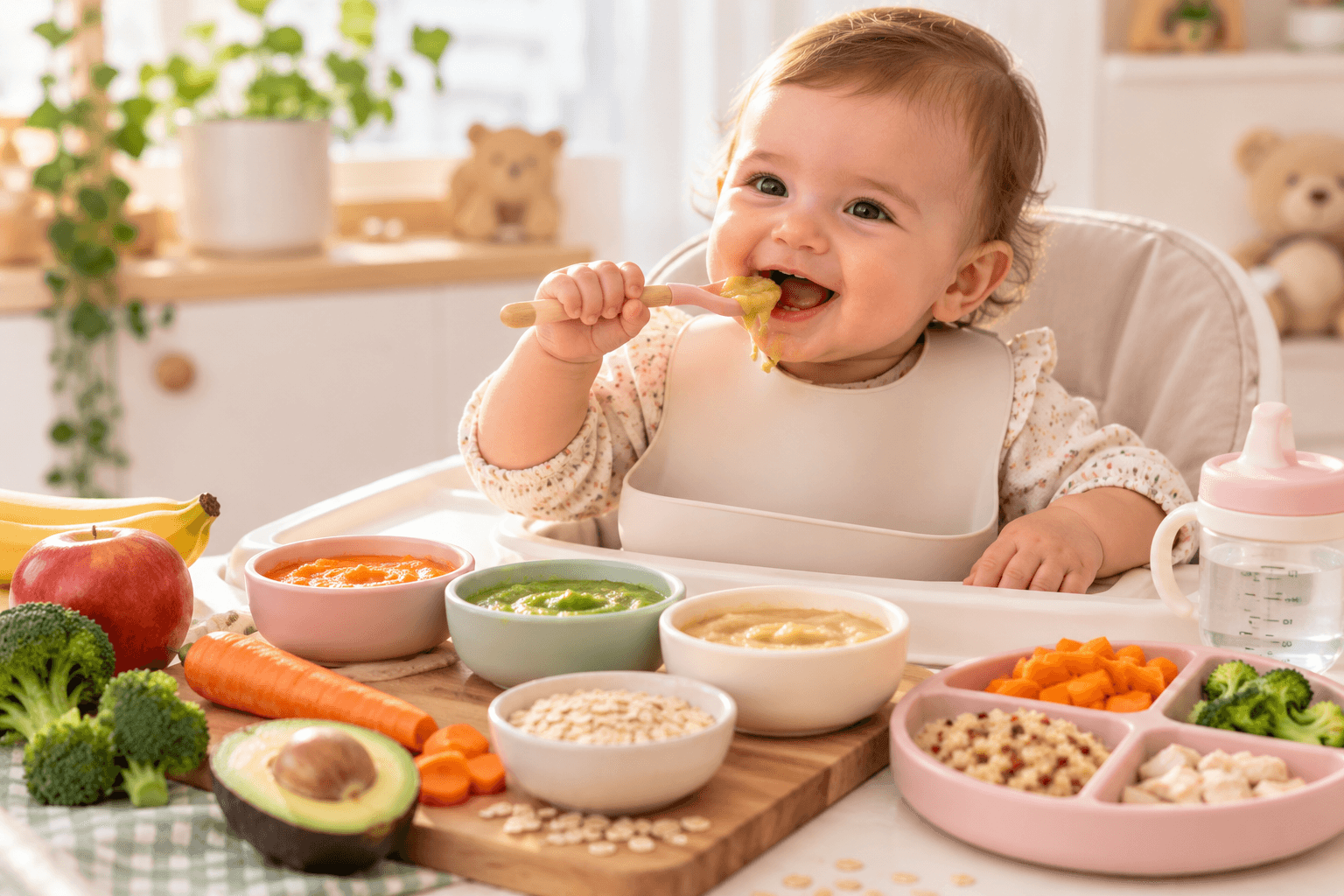
What are solids?
Solids, or complementary feeding in medical terms, are all the solid and semi-solid foods added to a baby's diet once breast milk alone is no longer enough. These foods do not replace breast milk; they complement it. The World Health Organization recommends breast milk alone for the first six months and complementary foods after that while breastfeeding continues. In my practice I plan this transition with you, at your baby's own pace.
How do you know your baby is ready?
- They can sit with support and hold their head steady,
- they show interest in food and try to bring it to their mouth,
- the reflex of pushing the tongue out when a spoon approaches has faded.
These signs appear around six months in most babies. Starting too early can strain the digestive system; starting too late sets the stage for iron deficiency and difficulties with textures.
How do we progress?
We start with single-ingredient foods and leave a few days between new ones. We increase the texture gradually, from purée to soft pieces, and give iron-rich foods such as red meat, legumes and egg an early place. We do not give honey or cow's milk as a drink before the first birthday, and we add no salt or sugar. Rather than delaying allergenic foods, we introduce them in a controlled way.
What do I do at the visit?
I assess your baby's growth curve and development, draw up a starting list that fits your family's routine, ask about any history of allergy and make a separate plan for higher-risk foods. At the following check-ups we look at amounts, variety and iron status together.
Frequently asked questions
At what age should I start solids?
The general advice is once your baby has completed six months. For some babies, starting between 4 and 6 months may come up; that decision is made together at a visit, based on your baby's development.
What should the first food be?
There is no single right answer. I usually suggest a simple start with a single-ingredient food such as a vegetable or fruit purée or yogurt; leaving a few days between new foods makes it easier to notice any sensitivity.
Should I delay egg and peanut?
Current guidance is not to delay. Early introduction in a suitable texture and small amounts is recommended for most babies; if there is a family history of food allergy, we make the plan together.
My baby eats very little. Should I worry?
In the first months it is the experience, not the amount, that matters; breast milk or formula remains the basis of nutrition. If weight gain is steady, progressing little by little is usually enough.
Other areas of interest
A Holistic Approach to Child Follow-up
Without waiting for illness, I follow growth, development and vaccinations at regular intervals, aiming to catch problems before they cause symptoms.
DetailsInformation on Childhood Vaccines
I plan and give the vaccines in the national schedule as well as optional additional vaccines, and follow together with you that the schedule stays on track.
DetailsThe Most Common Acute Illnesses in Childhood
I assess sudden-onset conditions such as fever, cough, diarrhoea and rashes, and draw the right line between home care and further investigation.
Details